To stay competitive and continuously improve, companies need to actively develop their operations. How can logistics or production processes be optimized? Work study provides a systematic way to examine and analyze tasks and processes, identifying opportunities for productivity improvement and more efficient workflows.
At Logent, we often apply methods based on motion sequence analysis in our process analysis work studies. This approach breaks down tasks into detailed components, from the smallest hand movements to longer transitions, such as moving from one picking point to another. This provides precise insight into the duration of each work step, standard time measurement, and overall process layout efficiency. The data gathered supports target setting, performance monitoring, and reliable evaluation of potential improvements. Work study allows us to identify inefficiencies and estimate the benefits of development measures with confidence, contributing to overall logistics optimization.
What is work study?
Work study is a collective term for methods and techniques aimed at productivity improvement. It is a versatile tool for examining and analyzing the quality, efficiency, and workload of tasks and processes. Through process analysis and work study, each phase of a task or process—and any deviations—can be assessed in detail. This enables determination of standard times for each step, the tools and equipment used, their utilization, and distances traveled during a task.
There are various work study methods, chosen based on the nature of the work. Processes involving physical activity often benefit from motion sequence analysis, which is based on extensive data regarding the time taken for different types of movements. In practice, the method uses structured templates to systematically record steps and calculate total task time, including tool and equipment usage. This provides a clear picture of process layout efficiency and potential areas for logistics optimization.
Work study is carried out in stages. Initially, the scope and objectives of the study are defined, along with the most suitable method—observation, time-motion study, or traditional time study. The next stage involves mapping the workflow and deviations through employee interviews, observation, and documentation. Once the data is collected, it is compared to actual resource usage, and potential areas for productivity improvement are evaluated against the defined objectives.
Supporting decision-making with work study
Motion sequence-based work studies provide fact-based insight into processes and their structure, supporting data-driven decision-making. The information collected can be applied in multiple ways:
-
Improving process efficiency and logistics optimization
-
Complementing hands-on experience with a scientific perspective
-
Increasing transparency over time, for example in pricing or billing
-
Simulating alternative approaches and evaluating potential benefits of changes
Common issues identified include shortcomings in tools, systems, work methods, or process layout. Deviations are analyzed to understand their impact on tasks and time usage. By identifying the most time-consuming aspects of work, we can address root causes and implement process improvements systematically, contributing to long-term productivity improvement.
The results of work studies can also inform internal cost calculations, pricing, and resource planning—both overall and at the level of individual tasks. They support profitability analysis and negotiations with clients, enabling better logistics optimization and efficient process layout design.
Furthermore, work study can improve ergonomics and employee well-being. Reducing physical strain, poor ergonomics, or inefficient resource allocation enhances overall workplace health and reduces costs.
Work study at Logent – dissecting and improving processes
At Logent, work studies have been conducted for many years across our sites. A key part of the work is breaking down processes into components and reconstructing them into more effective workflows. Analyzing potential improvement areas often uncovers new insights into how processes function and the role of deviations and human factors in everyday work. This contributes to optimized process layout and overall logistics optimization.
Motion sequence analysis is particularly suitable for clearly defined, repetitive processes but has also been applied to more complex workflows. Larger, multi-faceted processes require more effort, but the results provide valuable data that supports long-term productivity improvement. Not all processes need to be studied from scratch—data from similar processes can often be reused for efficient process analysis.
Based on our studies, Logent has optimized workstations, minimized walking distances, and improved process layout planning. Processes have been refined and adjusted, resulting in tangible gains in efficiency and logistics optimization.
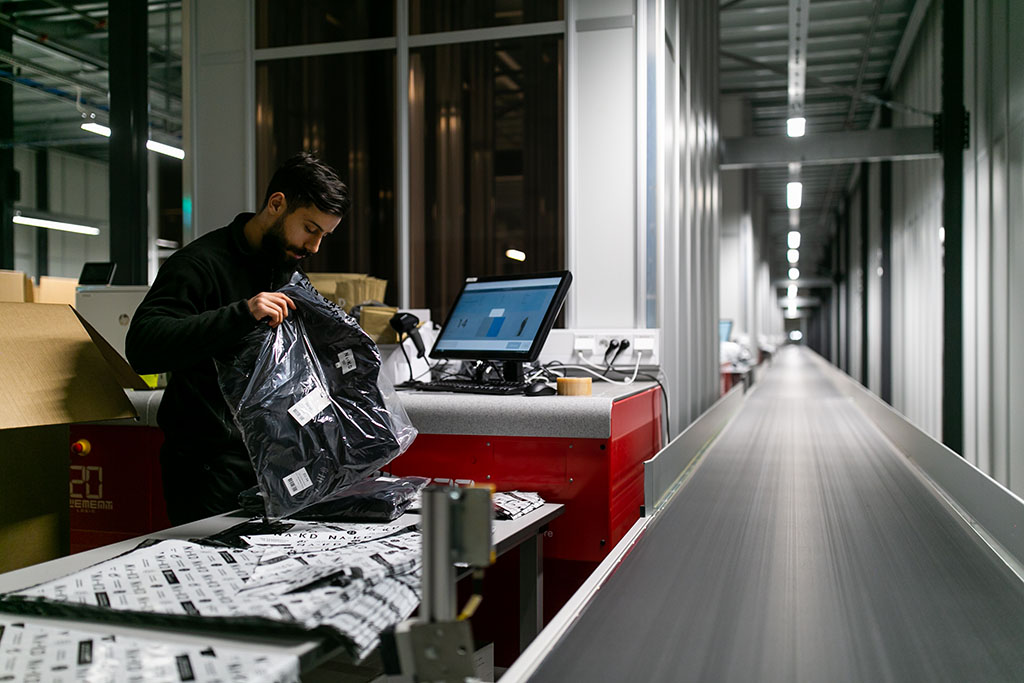
For example, one workstation study revealed significant savings through a few strategic changes. Initially, the layout was suboptimal, packing areas were limited, and tools were scattered. Employees had to walk long distances to retrieve packing materials.
After redesigning the workstation, relocating packing materials and essential tools closer to the point of use, and removing unnecessary items, travel distances were greatly reduced. Previously, retrieving materials for one order required an average of 20 steps; after the changes, only two. With dozens of orders processed daily, this translates to over 200,000 steps annually, cutting walking distances by up to 90%.
Work study also provides clients with detailed insights into their processes and operations. Understanding the components of storage and logistics allows us to recommend improvements that support their business. Even small refinements can significantly enhance efficiency, especially when handling high volumes. Motion-based analysis delivers measurable process improvements and valuable data to support informed decision-making and logistics optimization.